


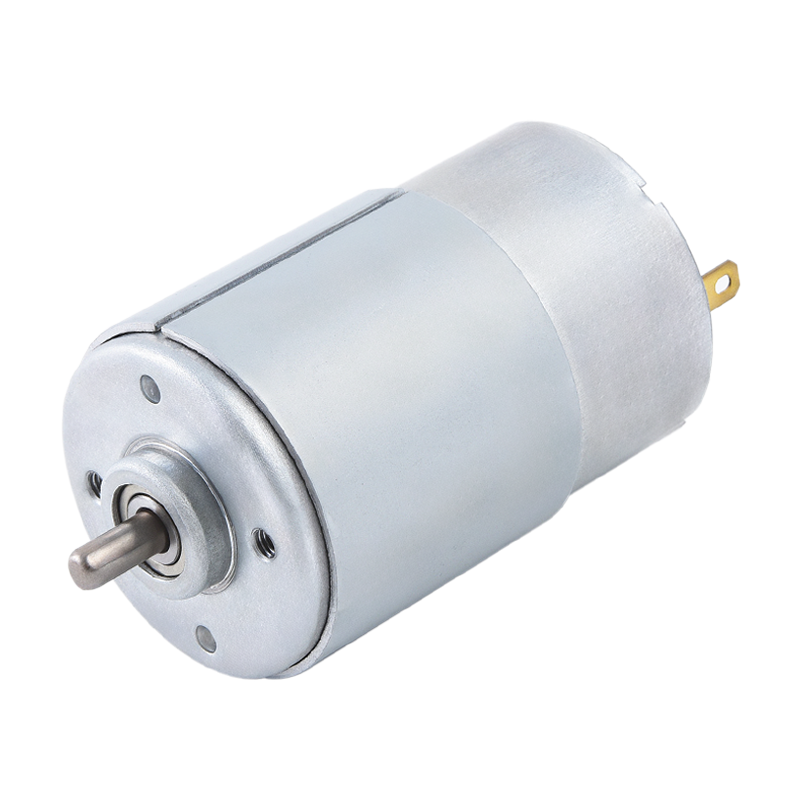
A request for a “12 V motor” leaves a DC motor manufacturer with unanswered questions about the load, installation and required configuration. When specifying a DC motor for OEM equipment, engineers and purchasing teams need the same reference: a working-point brief, a drawing and a complete model code where available.
This checklist helps you prepare that information, compare catalogue references and request a quotation that covers the intended assembly.
1. Prepare an OEM motor requirements brief
Describe the job at the motor shaft and how the equipment operates. If a requirement is still undecided, mark it for review rather than entering an assumed value.
- Equipment and mechanism: what the motor drives, the motion required and any transmission between the motor and the final output.
- Electrical supply: intended voltage, available current and the proposed driver or control arrangement.
- Loaded working point: required speed and torque, with units and the conditions under which those values apply.
- Operating cycle: running and resting periods, starting frequency, direction changes and any holding requirement.
- Mechanical interface: housing space, shaft dimensions, mounting features, wiring and connector requirements.
- Project quantities: sample demand and expected production demand, identified separately.
- Reference documents: an existing motor code, installation drawing, sample or equipment test record, with its revision.
A purchasing brief should also identify the delivery destination and the documents required for sample approval. Keep these requirements attached to the same configuration that engineering is reviewing.
2. Choose a motor or drive assembly to investigate
Use the motor and pump catalogue to identify a starting family. The following routes organise an enquiry; they do not establish that every motor in a family meets the same application requirements.
| Catalogue starting point | Information to bring to the review | Configuration checks |
|---|---|---|
| Brushed DC motors | Full winding code, supply and loaded working point. | Compare electrical data, shaft and mounting for that code. |
| Brushless DC motors | Motor and driver references, control method and feedback requirements. | Review the chosen winding, driver and connection drawing together. |
| Planetary gear motors | In-line output layout, reduction ratio, output load and available space. | Check the complete assembly, output data and gearbox length. |
| Worm gear motors | Right-angle installation, mounting and output requirements. | Review the ratio and load; request confirmation of any power-off holding requirement. |
| DC diaphragm pumps | Liquid, flow and pressure requirements, connections and operating cycle. | Confirm the selected pump assembly and its current configuration datasheet. |
3. Compare the complete motor code and test condition
A series name and nominal voltage are useful search filters, but they do not describe a complete winding configuration.
Two 12 V references can have different published speeds
The RS-550 product page includes both HRS-550S-7612F and the related HRS-555P-5114 reference. Each is listed at a nominal 12 V, but their published no-load speeds are 20,500 rpm and 13,100 rpm respectively. An enquiry for “a 12 V 550 motor” therefore needs the full code or a defined performance requirement.
Keep no-load, maximum-efficiency and stall data separate
For HRS-775S-9100F on the RS-775 product page, the reference row lists 12 V nominal supply, 18,800 rpm no-load speed and 16,160 rpm speed at maximum efficiency. These are different test conditions. The page lists stall values separately.
When comparing suppliers, carry the column heading, unit and full model code with every value. Ask for the speed, torque and current associated with your intended loaded operating point rather than combining numbers from different conditions.
4. Review the drawing and control interface
Check the installation drawing alongside the electrical table. Confirm the body envelope, usable shaft, mounting holes, shaft orientation and wiring exit against your equipment layout.
For a geared assembly, keep the motor and gearbox configuration together. The 24JX370 planetary references include stage-dependent gearbox lengths. The 4058WG31S worm references describe a right-angle output layout. Check these details against the chosen ratio and drawing.
For brushless selection, include the proposed driver and connection requirements. For example, the 5775BL references show phase and Hall connections for an external driver. Request the drawing and interface information for the selected configuration before approving it.
5. Tie sample evaluation to the production specification
Give the evaluation sample a traceable model code and drawing revision. Record the supply, load and operating cycle used in the equipment test, then document any requested changes to the winding, shaft, wiring or assembly.
The quotation and approval record should identify the configuration being ordered, required quantities, acceptance requirements and any information still awaiting confirmation. Review these items with the supplier before placing the production order.
Frequently asked questions from OEM buyers
Is a motor series name enough to request a quotation?
It provides a starting point. Include the full configuration code if you have one. Otherwise, send the supply, loaded working point, installation drawing and expected quantities so the manufacturer can review a suitable configuration.
Should I compare stall torque with torque at maximum efficiency?
Keep each value attached to its named test condition. Hongyang’s brushed-motor references list maximum-efficiency and stall data separately. Use the required loaded working point in your enquiry and ask for the corresponding performance information.
What if some specifications are unknown?
List what is known and identify the open questions. A reference motor, sample or mechanism drawing can support the discussion. Request confirmation of the missing details before sample or order approval.
Send your specification for an OEM review
Bring the requirements brief, selected model references and drawing to the same enquiry. Request a motor quotation, or discuss custom DC motor development when your project needs configuration changes.